
Multimodal perception
Computer vision and sensor fusion (thermal, optical, acoustic, electrical) for in-process quality monitoring.
Building Physical AI for manufacturing: machines that sense, predict, and correct themselves in real time.
I am a Ph.D. student in Industrial Engineering at Louisiana State University and a Graduate Research Assistant in the AnalyticsIQ Lab. My research connects in-situ monitoring, digital twins, and optimal control for metal additive manufacturing (WAAM, DED, and LPBF), and I recently completed my M.S. in Industrial Engineering (August 2026). My current work extends to robotics for manufacturing.

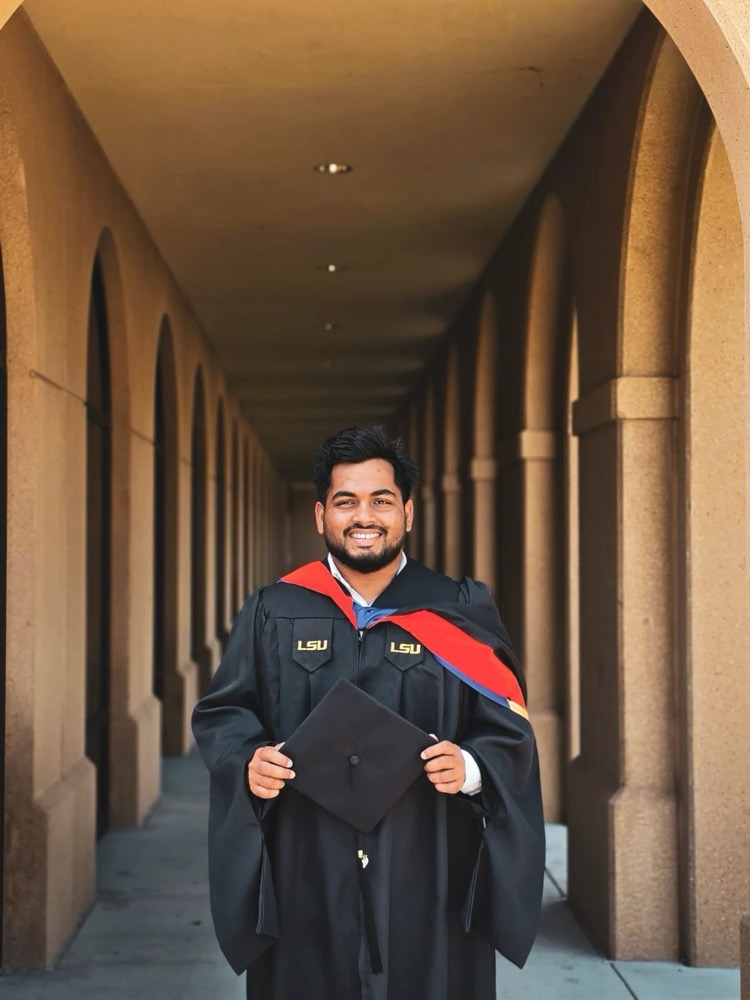
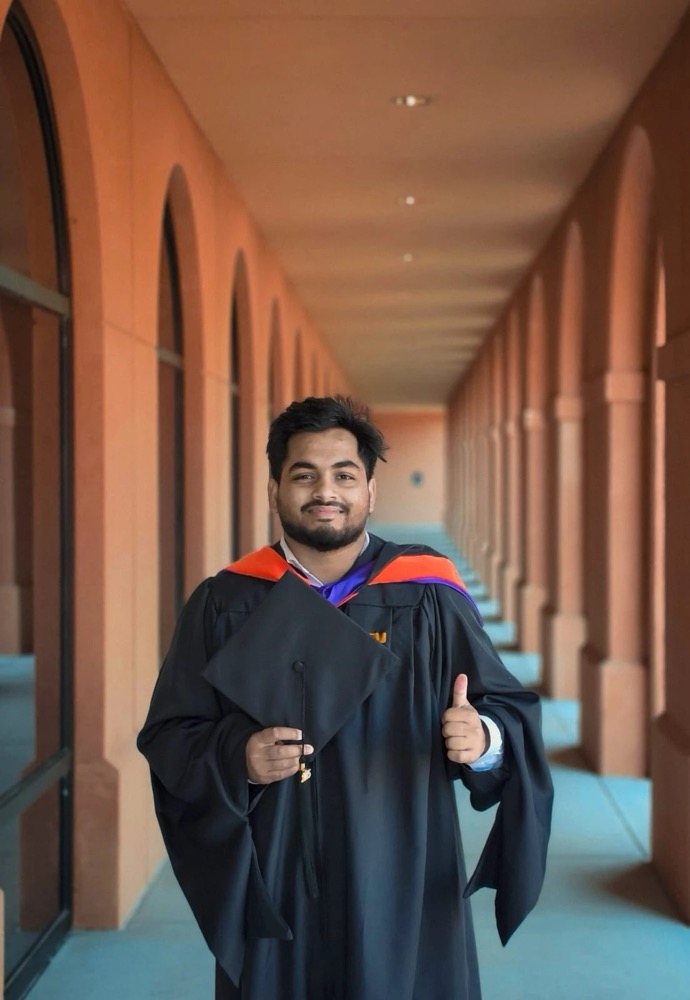
Metal additive manufacturing can print complex parts, but it still struggles to detect process changes and correct defects during fabrication. I work on the full loop, from sensing to action.
Computer vision and sensor fusion (thermal, optical, acoustic, electrical) for in-process quality monitoring.
Physics-informed and data-driven models that connect process data to part quality.
Model predictive control that selects corrective actions within machine and safety limits.
Real-time inference on NVIDIA Jetson with TensorRT, close to the machine.
Papers, awards, talks, and milestones. Scroll inside the box for older items.
Four papers, each with a visual research summary of the method and findings. The full list is on the Publications page.
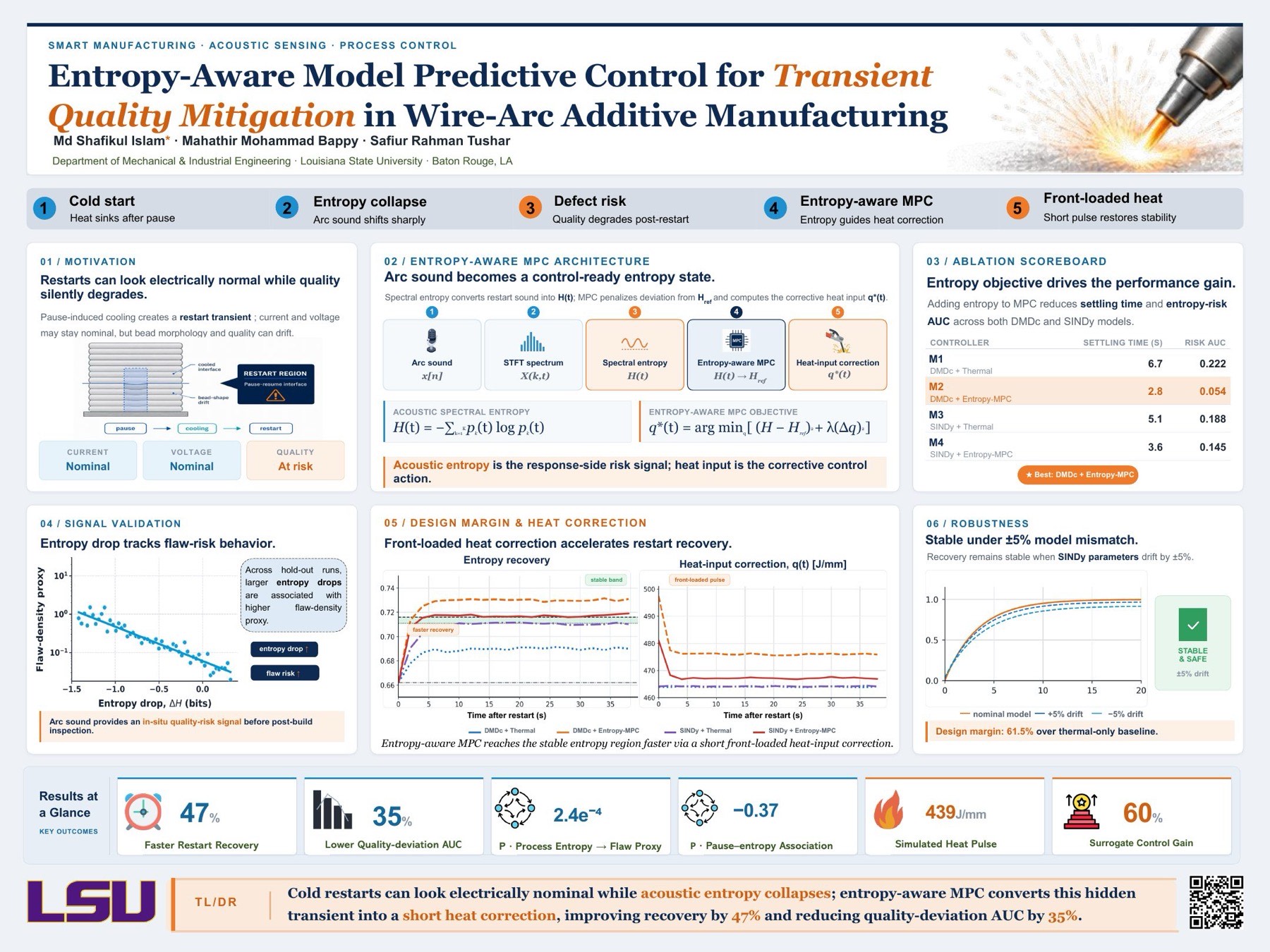
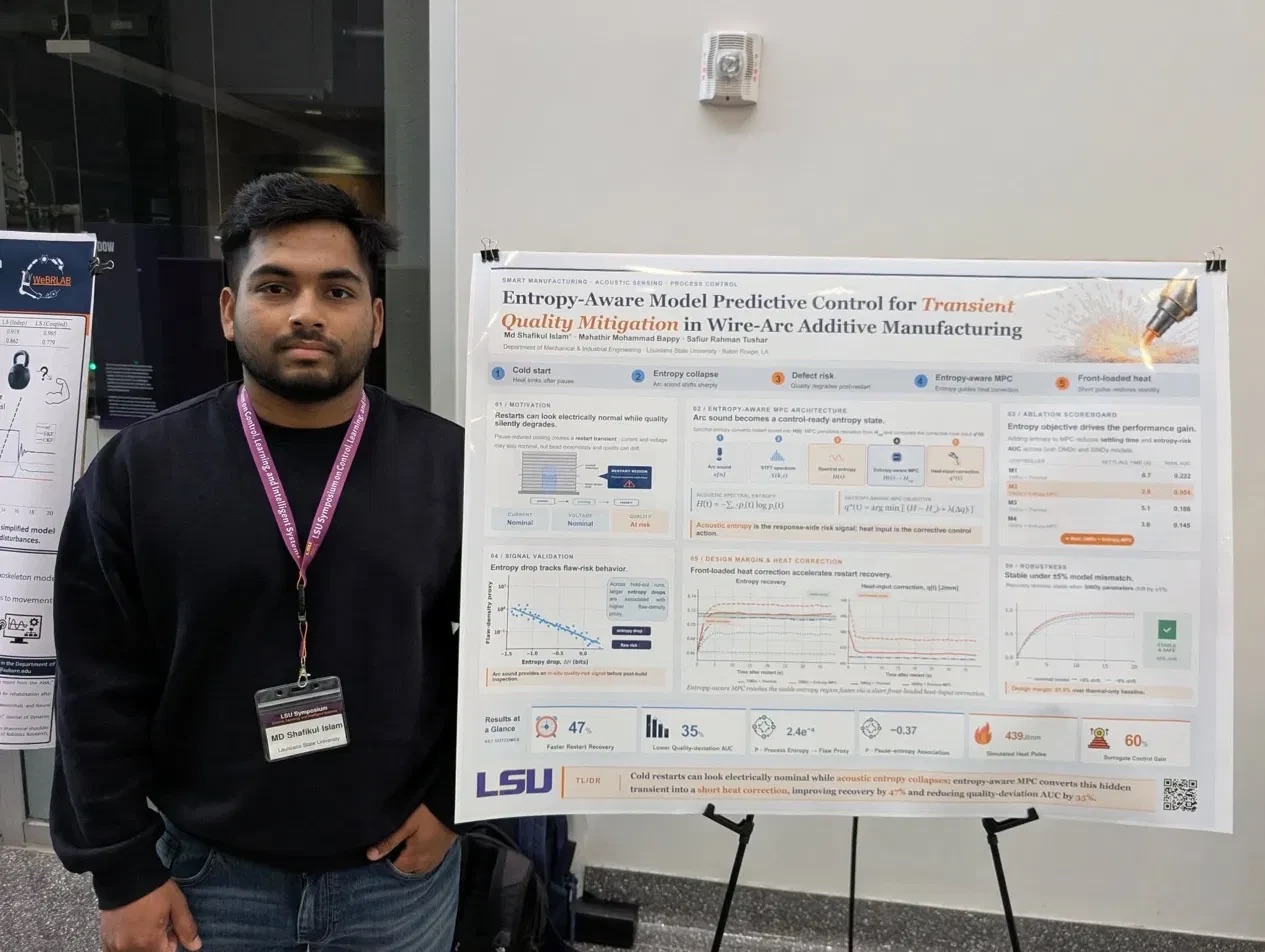
Poster, LSU Control Systems Symposium, 2026
Restart transients in WAAM can remain invisible in current and voltage. Spectral entropy of the arc sound serves as a control state for MPC, which shortens recovery through a front-loaded heat correction (simulation and surrogate-model study).
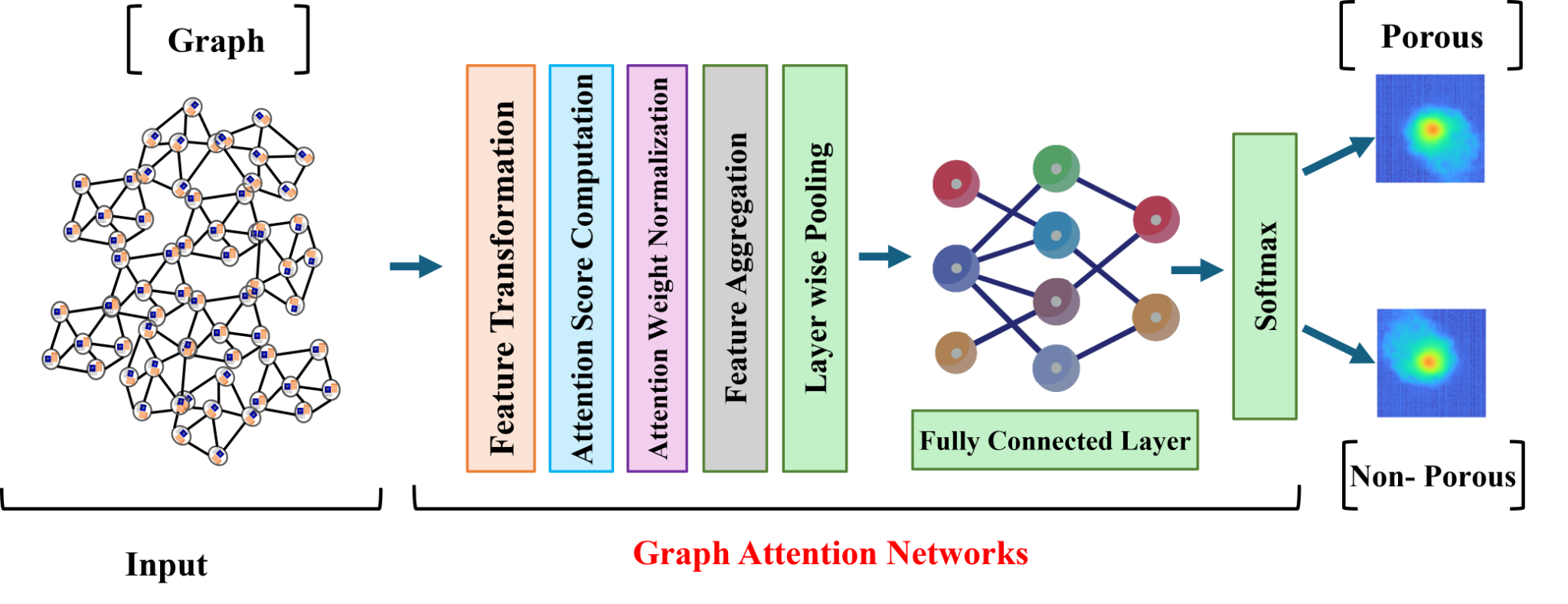
Major revision at ASME JCISE, arXiv:2604.05077
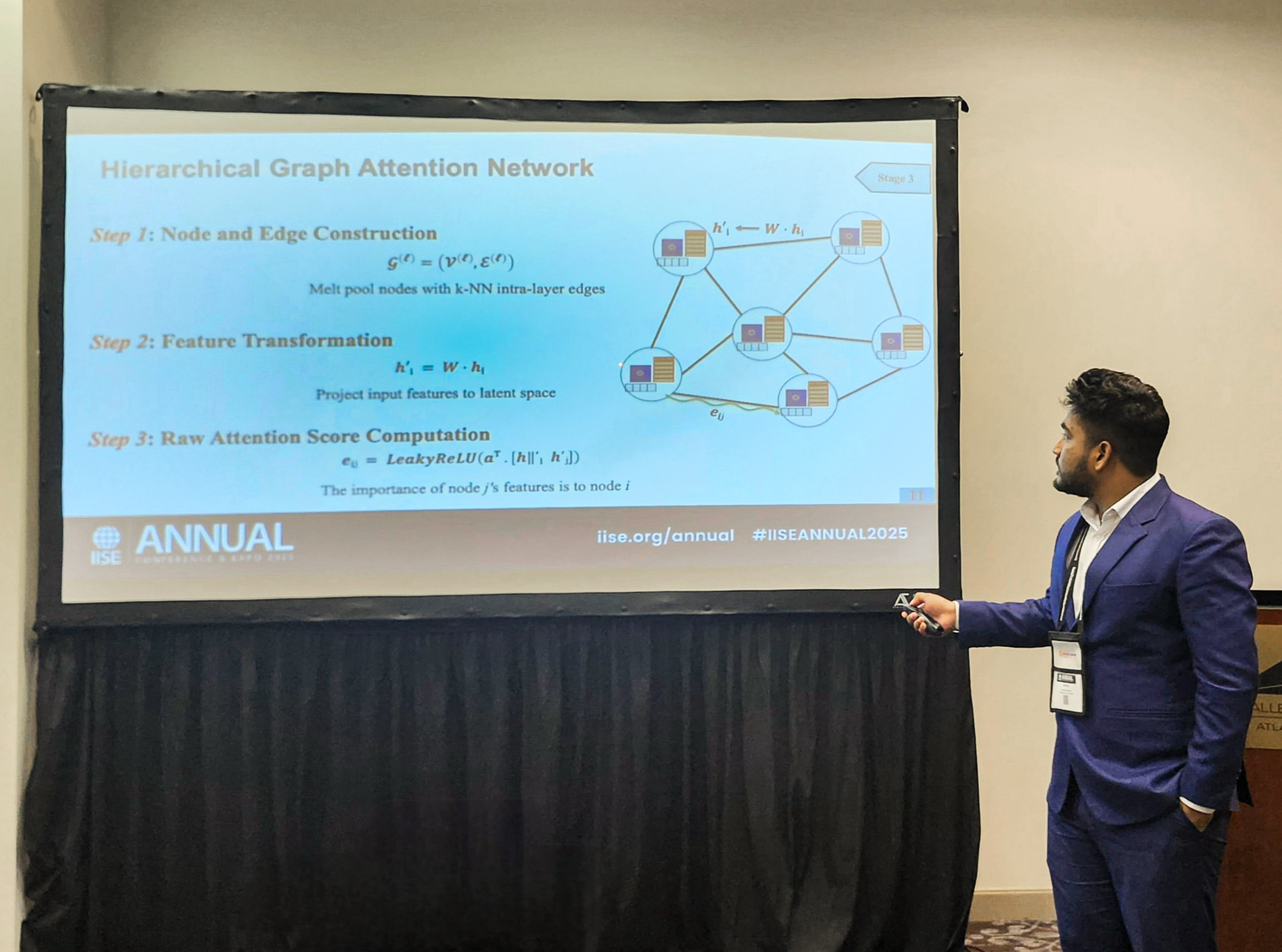
Embedding-level local differential privacy with feature-aware, anisotropic noise allocation, combined with a layer-wise graph attention network, enables collaborative porosity detection while preserving much of the non-private utility.
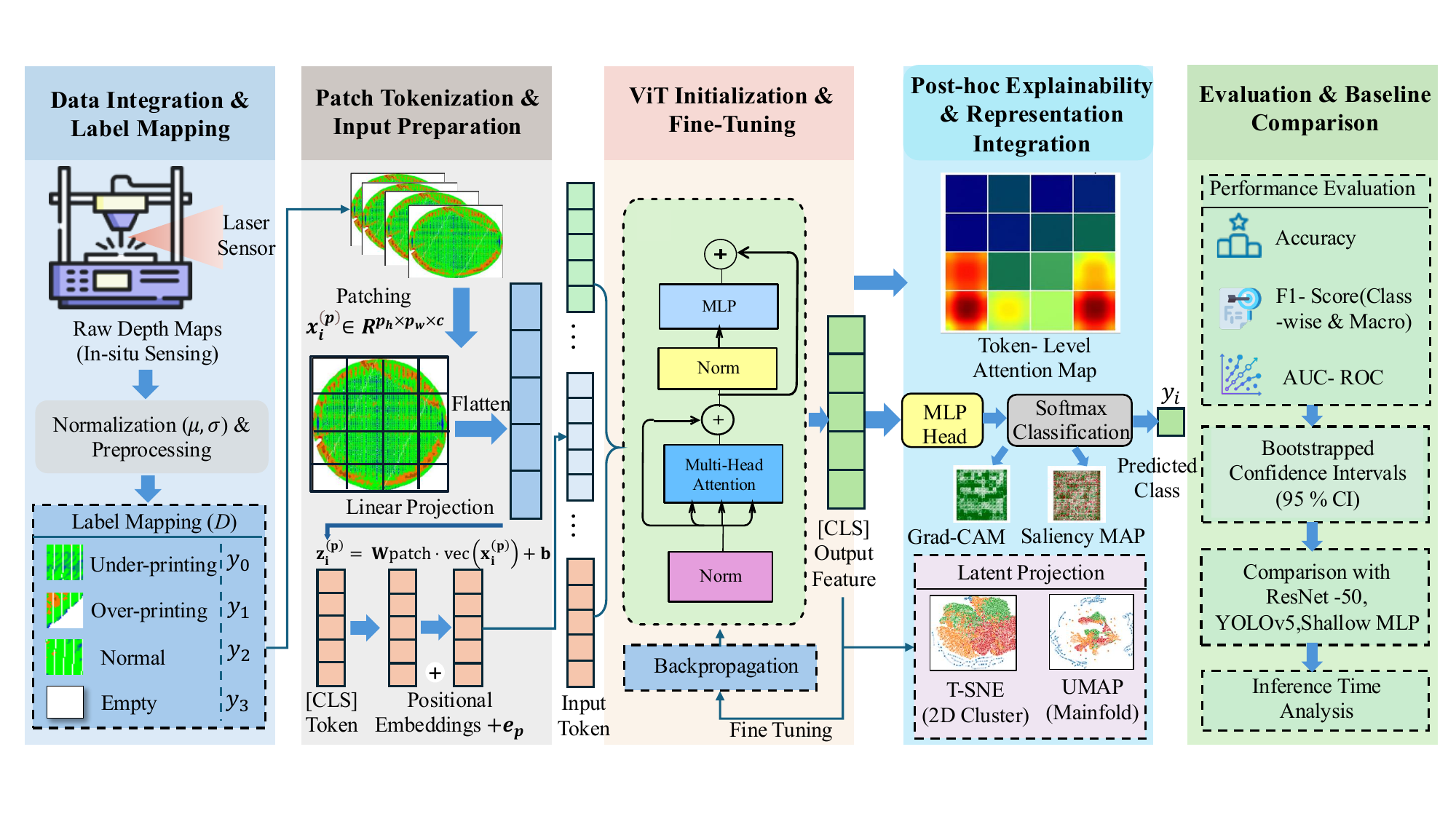
International Journal of Advanced Manufacturing Technology, 2026
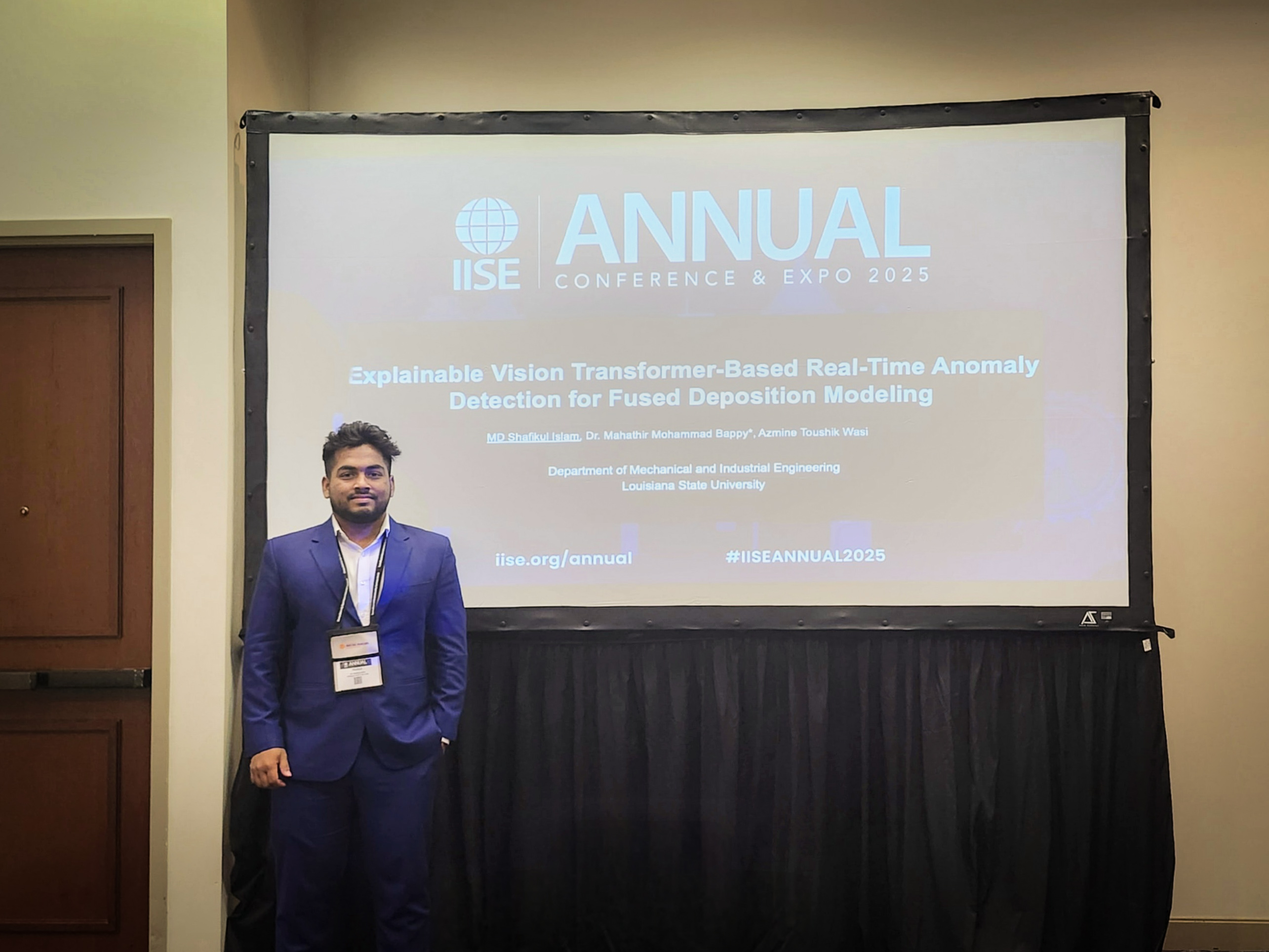
An optimized vision transformer on laser-scan depth maps uses global self-attention to detect spatially distributed surface anomalies in FDM in real time (macro-F1 0.877, support-weighted mAUC 0.972).
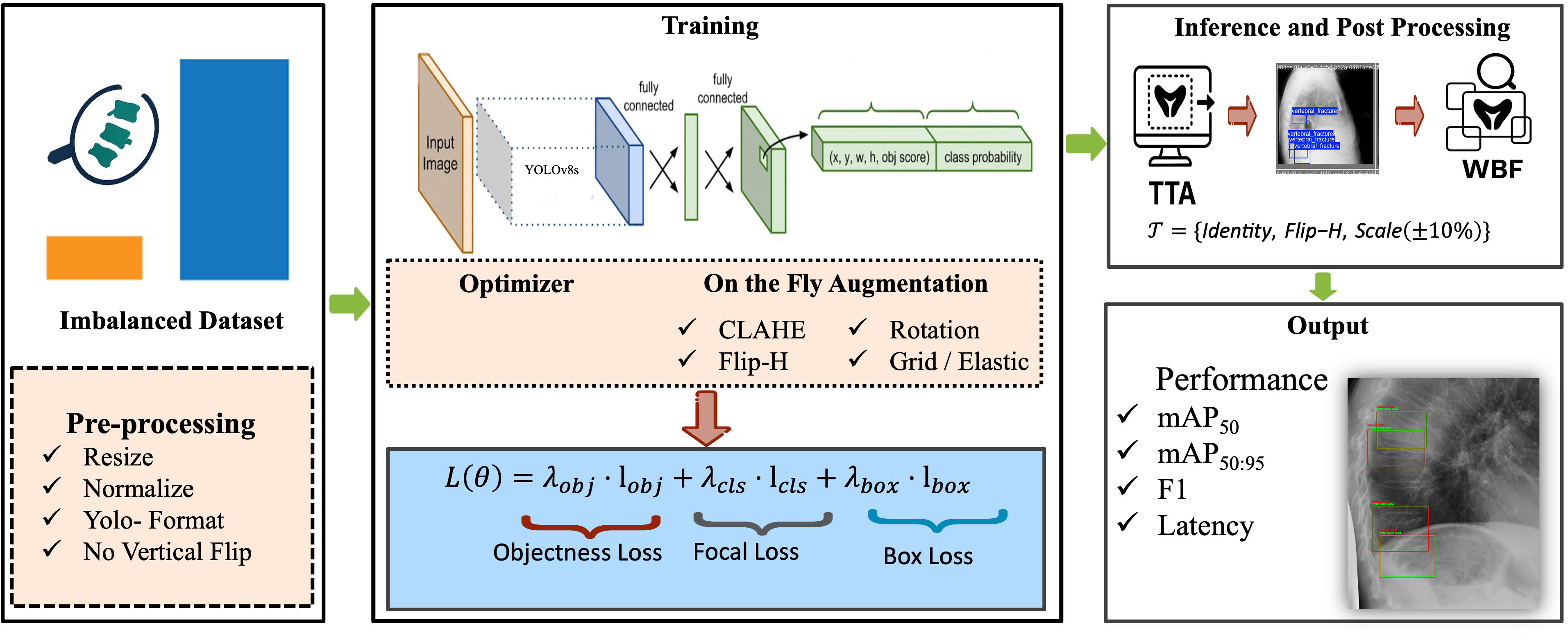
IISE Transactions on Healthcare Systems Engineering, 2026
A single-stage YOLOv8 detector with targeted augmentation and weighted box fusion localizes suspected vertebral fractures on thoracic spine X-rays in about 126 ms per image.

I welcome conversations about research collaborations, internships, and roles in Physical AI, robotics, manufacturing AI, and applied science. Email is the fastest way to reach me.